Article: This Bowl of Tea Will Not Come Again: Ichi-go Ichi-e and a Single Vessel
This Bowl of Tea Will Not Come Again: Ichi-go Ichi-e and a Single Vessel
Gallery Son Journal · on ichi-go ichi-e, and the work of Kato Takaya
When a tea master whisks a bowl of tea, they do it as though it could never be repeated — because, in truth, it cannot. The same guests may return next week to the same room, and the tea may be scooped from the same caddy. And still it will be another gathering entirely: a different hour, a different weather of the heart, a day that has never existed before and will not exist again. This is ichi-go ichi-e. And the thing that holds such a moment, cupped in two hands, is a single bowl.
Ichi-go ichi-e — the once-only meeting
Ichi-go ichi-e is written with ichigo, “one lifetime,” and ichie, “one meeting”: a single encounter in a lifetime. The phrase was born in the way of tea. It traces to the teaching of Sen no Rikyū, set down by his disciple Yamanoue Sōji in the Yamanoue Sōji Ki as “a meeting that comes once in a lifetime,” and it was given its familiar four-character form in the 19th century by Ii Naosuke — lord of the Hikone domain and a devoted tea practitioner — in his treatise Chanoyu Ichie Shū. However often two people may meet, he wrote, the gathering of a single day can never be repeated as it was.
There is no next time
Ii Naosuke was also the man who, as Great Elder of the shogunate in the last years of Edo, held the helm of the state — and who was cut down outside the Sakurada Gate in 1860. Knowing that end, one is tempted to read the shadow of fate into his words. But the weight of ichi-go ichi-e does not come from the life of the man who wrote it. It comes from what is written. The host pours every sincerity into this gathering that will not return; the guest, in turn, receives the bowl knowing the moment cannot come again. For neither of them is there a next time. And so everything is placed in the bowl before them, now.
The bowl that holds the moment
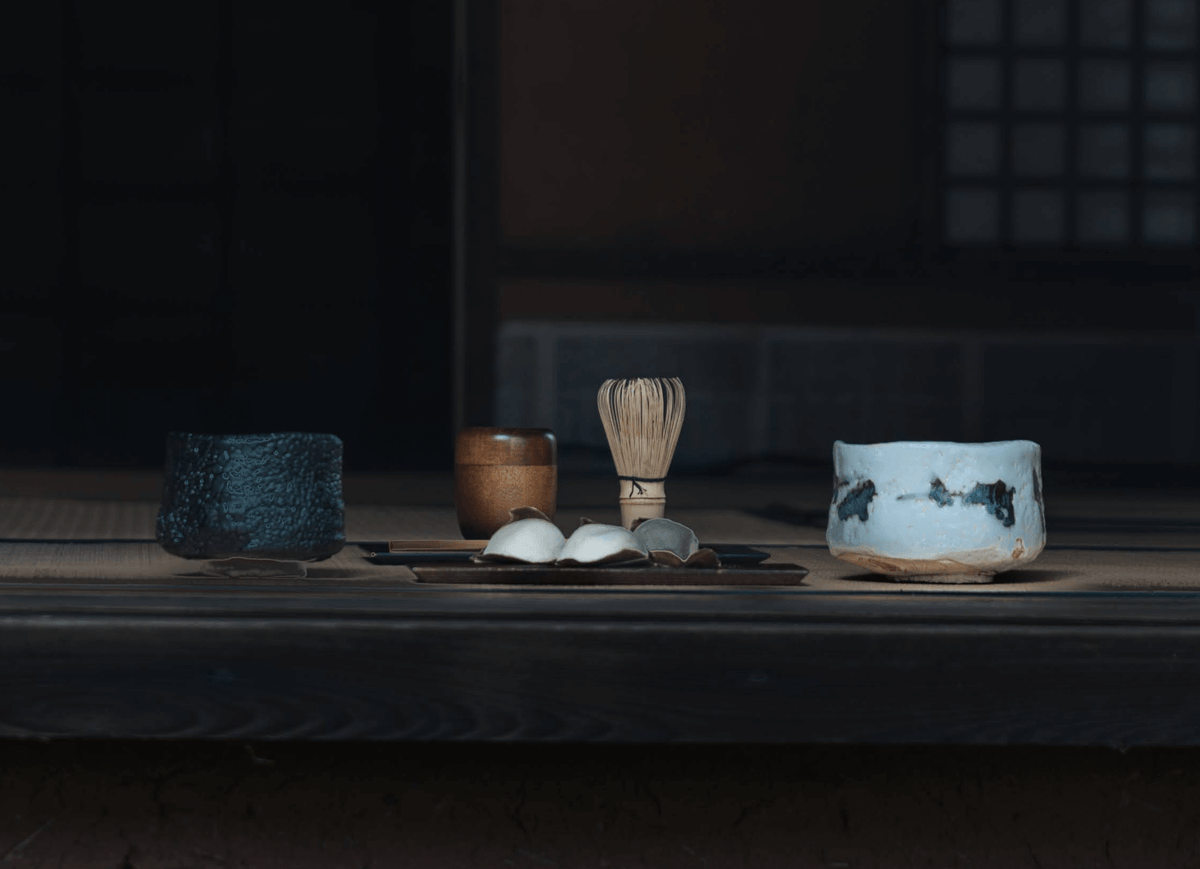
Why does the way of tea choose its objects so carefully? The scroll, the flowers, and the bowl — each is selected for this one, unrepeatable gathering. A bowl is not merely a container for tea. It is a way of holding the heart in the here and now. On its own, a fine bowl cannot make a moment matter. But a bowl changes how we hold ourselves when we take it up. Receive it in both hands, feel its weight, bring the rim to the lips — a bowl draws out of us a slower, deeper attention.

“A tea bowl is not a tool for stopping time,” says Kato Takaya. “It is more like an anchor that ties the heart, for a moment, to time as it flows past. The weight and the warmth in the hand call a mind that has scattered in every direction back to the bowl of tea in front of it. That is all it does — and that is what matters.”
An unrepeatable bowl, an unrepeatable moment
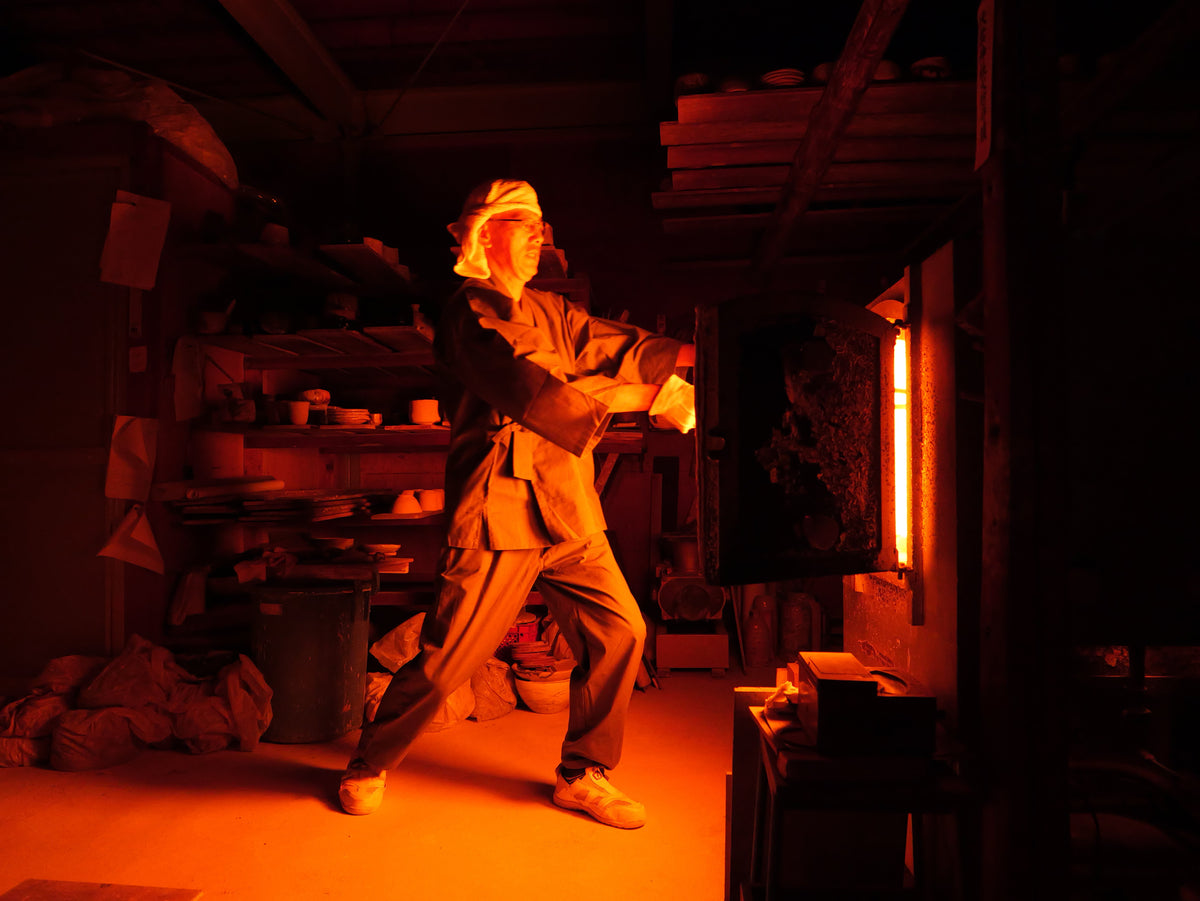
Here there is a quiet resonance. Seto-guro comes from a firing one bowl at a time. Shino, set side by side in the same kiln and dressed in the same glaze, changes its face with the very place it stands, and no two are ever born alike. Both are vessels of a fire that comes only once. And that once-only bowl, in turn, comes to hold a once-only gathering. A bowl that can never be made again becomes the vessel of a moment that will never return. This is no accident: the bowl and the moment belong to the same impermanence, and so they answer to one another.

“Someone uses a bowl I could never make again, in a moment that will never come again,” Kato says. “When I think of that, I can spare no effort, firing after firing. It is for that person, and their one bowl of tea, that I stand before the fire now.”
On receiving
There is a paradox at the heart of ichi-go ichi-e. The harder you grip a moment, the faster it runs out between your fingers. Loosen your hold — receive it rather than seize it, and ask nothing of it — and though it lasts no longer at all, it somehow comes to feel whole.

“It need not be a special day,” Kato says in closing. “An ordinary evening, a single bowl of tea. That, too, is a bowl that will not come again. If you take the bowl in your hands and are simply there, in that one moment — that, I think, is the whole reason I make them.”
The tea bowls of Kato Takaya can be seen at Gallery Son.