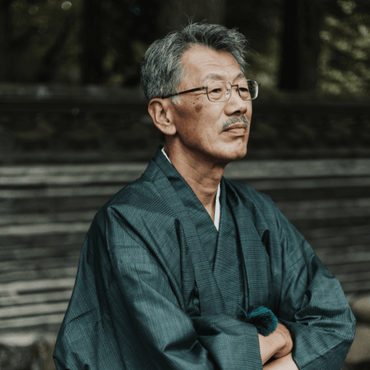
Crafting Technique [Oribe]


Deep captivating green
When held up to the light, Oribe shines with an emerald green hue.
Up close, its vivid, beautiful, and deep green color is mesmerizing.
This non-uniform color changes expression depending on the viewing angle, possessing a beauty that you can gaze at endlessly.
Oribe pairs exceptionally well with flower arrangements, completing the piece and evoking the image of a single flower blooming in a meadow or forest.

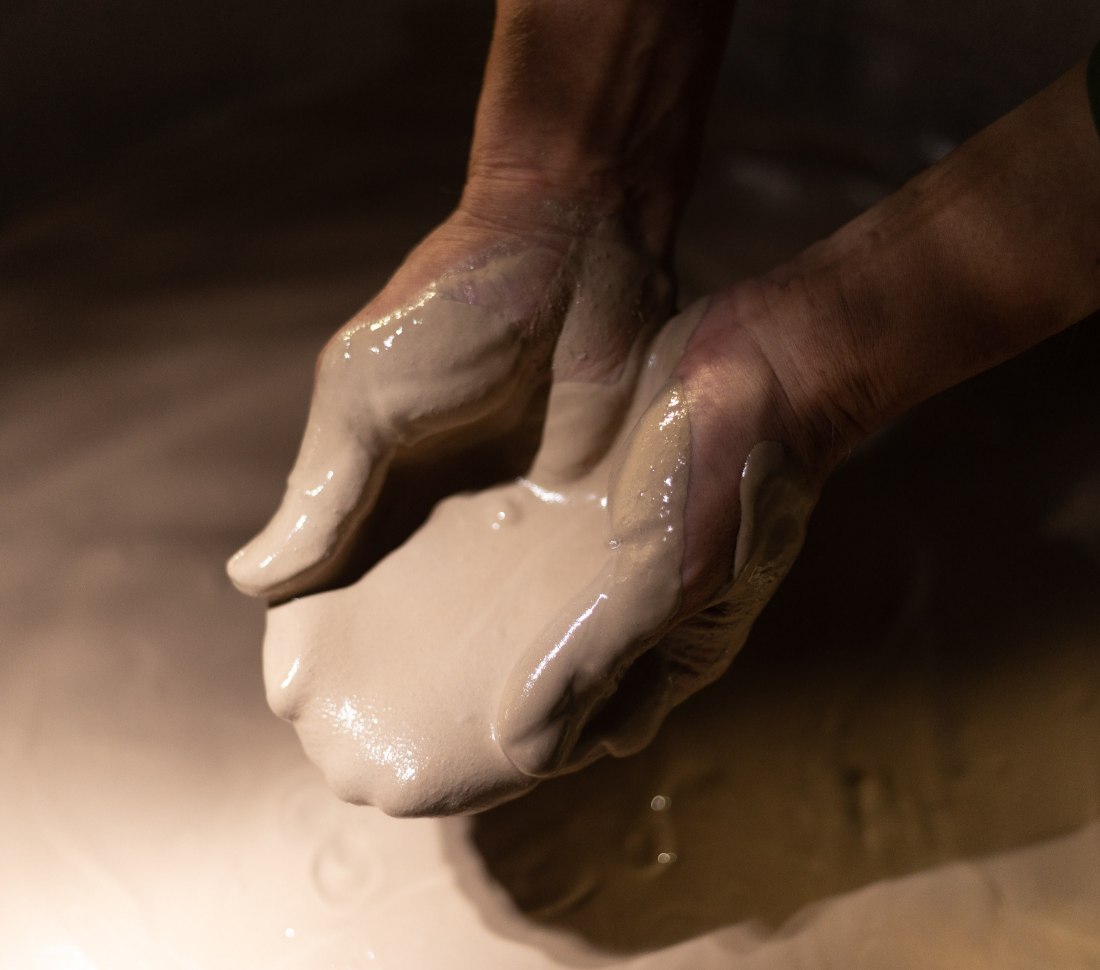
Son's Oribe pieces are blended with the rare Mogusa (百草) clay.
Oribe pieces with the texture of Mogusa clay visible within their vibrant colors.
It is said that Oribe ware was created by the warrior tea master Furuta Oribe, a disciple of Sen no Rikyū.
Oribe ware is known for its deep dark green color, which captivated people of the time with its rich hue.
The beauty of the glaze and the texture of the clay underneath can both be appreciated, offering a tactile and visual experience that is the charm of Oribe.
Son’s works capture and express the beautiful nature of Japan as an inner landscape.
These pieces are crafted to enrich the heart even amidst a busy life.
They can be enjoyed just as much as a standalone display without flowers.
100 days of pottery making process
The approximately 100-day pottery process until the completion of the vessel results in a unique creation born from various encounters and experiences.

Mogusa clay is exceptionally rare. Even within the Mino region, only a few mountains yield it, and a single site is said to give no more than about 50 cubic centimeters. The truth is that fine Mogusa clay has become almost impossible to obtain today.

I take in the beauty of Japan's four seasons and the changes in nature, let them settle within me, and give them form through sketches. Drawing is close to putting one's heart onto paper. I spend about seven days carefully considering the shape and the colors.

Impurities and small stones are removed with a sieve, and iron is extracted from the clay. The clay's plasticity is then adjusted for the next step, and it is left to rest for two to three months. How carefully this work is done has a great effect on the finished piece.


Kneading has two stages: rough kneading, which makes the clay evenly firm, and spiral kneading (kikuneri), which removes the air. Because the clay must not dry out, this work calls for a skilled, swift hand. By adjusting the firmness to suit the forming method—hand-building, the wheel, or slab work—many different kinds of beauty can be expressed.
In Japanese, one does not "turn" the wheel but "draws" it (hiku)—a word that also carries the sense of paring something down to its essence. At Son (尊), we give it the further meaning of "drawing out." Please feel the beauty of subtraction: what remains once everything unnecessary is taken away. With a few exceptions, Son uses a hand-turned wheel, faithfully recreated from one in actual use a hundred years ago.

After a few days of drying, the piece is trimmed and its form refined. Much of this will later lie beneath the glaze, yet the underlying structure cannot be hidden and greatly affects the final firing. I use wooden spatulas of red pine that I make myself—more than ten kinds, chosen according to the part being shaped—and take my time working every detail toward the ideal form.

No drying machines are used; the pieces dry in the natural wind. Waiting patiently for the moisture to leave the clay is part of Son's spirit of making—staying true to the methods of old. At the workshop on its high plateau, the voice of the wind can be heard in every season. It taught us that the wind blowing across the land is also part of the work.

In a small kiln, the moisture remaining in the clay is driven off. Unlike other clays, Mogusa clay is especially prone to cracking as it cools, so the kiln is kept at a lower temperature to reduce the risk. If the bisque firing is too hot, the clay becomes too dense and will not take the glaze well; if it is too cool, the clay softens when the glaze is applied and the form collapses.

[Shino] A glaze blended from several kinds of feldspar produces a white like fresh snow. Because this white shifts subtly with the proportions of feldspar, the finest Shino is born only through repeated trial and error.
[Setoguro] The shade of black changes subtly with the kind of wood ash used, so many blends are tried in pursuit of the ideal black.

With all five senses sharpened, I listen to the voice of the kiln. Because the result changes greatly with the season and the weather, I face the fire and adjust the temperature for more than five days during the firing. It is the only time I cannot converse with the clay—but it is also a joyful time of conversing with the fire. Until the kiln door is opened, neither the color nor the finish can be known, and only about one piece in ten turns out as I had hoped.


Oribe flower vase

Oribe flower vase
When held up to the light, Oribe shines with an emerald green hue.
Up close, its vivid, beautiful, and deep green color is mesmerizing.
This non-uniform color changes expression depending on the viewing angle,
possessing a beauty that you can gaze at endlessly.
Oribe pairs exceptionally well with flower arrangements, completing the piece and
evoking the image of a single flower blooming in a meadow or forest.
Son’s works capture and express the beautiful nature of Japan as an inner landscape.
Even amidst a busy life, these pieces are crafted to enrich the heart.
They can be enjoyed just as much as a standalone display without flowers.
Oribe Tsubo

Oribe Tsubo
Oribe Tsubo are characterized by their beautifully shining emerald green glaze, with a luster and depth that change expression depending on the viewing angle.
This characteristic breathes new life into the Tsubo and imparts a quiet charm to the entire space.
The natural flow of wind and rain from the mountains, forming rivers that eventually reach the sea.
Son captures and expresses such transitions in Japan’s nature as an inner landscape.
Oribe Tsubo are masterpieces that symbolize Japanese aesthetics and tradition, possessing the power to transform the atmosphere of a room.
Oribe plate

Oribe plate
When held up to the light, Oribe shines with an emerald green hue.
Up close, its vivid, beautiful, and deep green color is mesmerizing.
This non-uniform color changes expression depending on the viewing angle, possessing a beauty that you can gaze at endlessly.
When dishes are plated, this deep green enhances the presentation, highlighting the presence of the food.
The Oribe plate not only accentuates the food but also evokes the lush green nature of Japan's beautiful original landscapes after the meal.
Oribe sake vessel

Oribe sake vessel
Up close, its vivid, beautiful, and deep green color is mesmerizing.
The non-uniform color visible after pouring sake changes expression depending on the viewing angle, possessing a beauty that you can gaze at endlessly.
Son’s works capture and express Japan's four seasons and natural beauty.
The Oribe Shunomi evokes a profound sense of drinking surrounded by Japan's beautiful nature.
How to use and care for your utensils

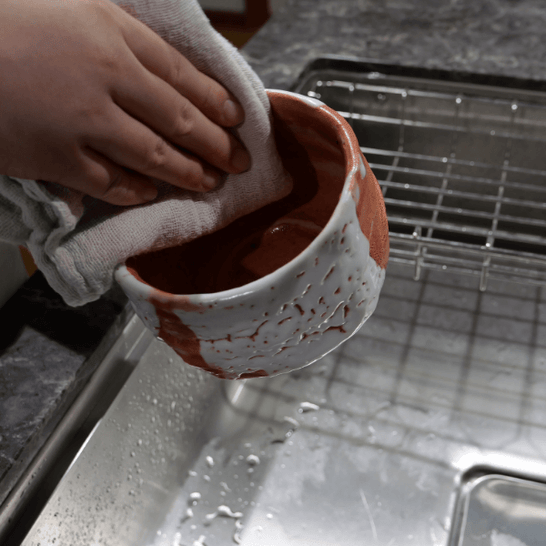
Wipe off the water with a soft cloth or kitchen paper.
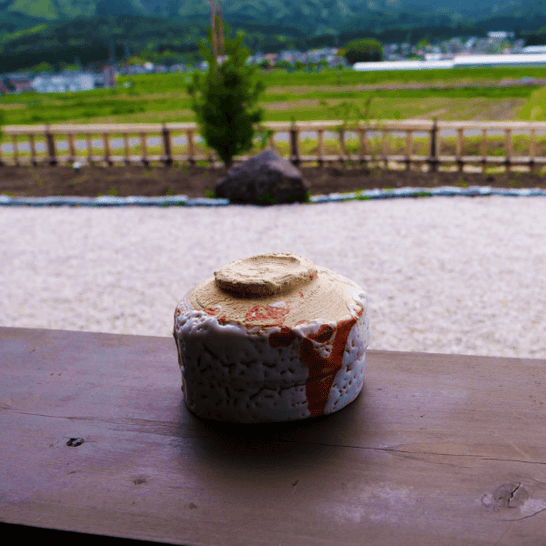
Sun-dry for 2 hours, or if the weather is bad or drying indoors, dry for 12 hours.
The bottom (foot) of the matcha bowl is where you can directly feel the rare clay, but it can absorb water.
To prevent mold, please complete the drying process as outlined in STEP 3.