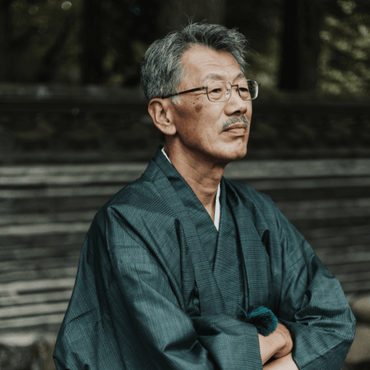
Production technique [Setoguro]


One from one kiln
Setoguro is known for a deep black that seems to draw you in.
To bring out this beautiful black, a glaze of ash mixed with oniita (iron-rich clay) is applied, and the piece is pulled from the kiln while still firing at high temperature and cooled rapidly.
This technique is also called "hikidashi-guro" (drawn-out black).
Setoguro, a legendary ware made for only about 30 years in the world of tea more than 450 years ago, is said to hold a value of its own within wabi-sabi, the aesthetic unique to Japan's tea ceremony.
Pulled from a kiln above 1,100°C and cooled rapidly, it turns jet black while giving off a beautiful sound (the sound of kannyu, the fine crazing of the glaze).
At most three pieces of Setoguro can be fired in a single kiln firing.
A satisfying black is extremely hard to achieve; if one satisfying piece comes out of a kiln—"one kiln, one piece"—we consider it a success.

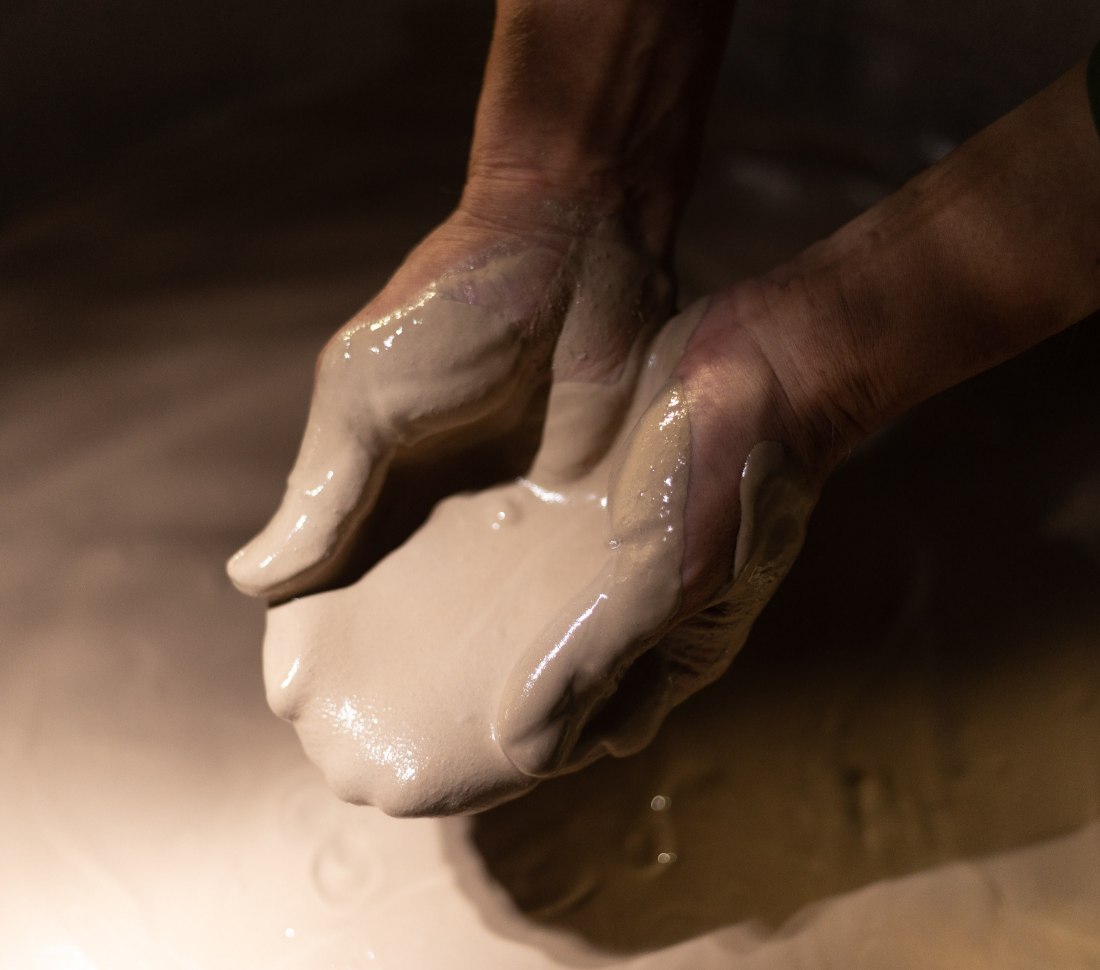
The raw material for Setoguro and Shino, Mogusa clay, is a rare clay that is difficult to obtain, destined to become the material for elusive vessels.
The clay found in the Mino region is considered rare even on a global scale.
Over thousands of years, volcanic activity and rain have altered its properties. The natural terrain, surrounded by mountains, has produced the unique clay specific to this region. The soil accumulated in this area, commonly known as Mogusa clay, contains a small amount of iron and can withstand rapid cooling. This results in the deep, absorbing black of Setoguro and the beautiful fiery red that symbolizes Shino. Mogusa clay is coarse and contains many fine air pockets, giving the finished product a warm and soft feel that fits comfortably in the hand.
100 days of pottery making process
The approximately 100-day pottery process until the completion of the vessel results in a unique creation born from various encounters and experiences.

Mogusa clay is exceptionally rare. Even within the Mino region, only a few mountains yield it, and a single site is said to give no more than about 50 cubic centimeters. The truth is that fine Mogusa clay has become almost impossible to obtain today.

I take in the beauty of Japan's four seasons and the changes in nature, let them settle within me, and give them form through sketches. Drawing is close to putting one's heart onto paper. I spend about seven days carefully considering the shape and the colors.

Impurities and small stones are removed with a sieve, and iron is extracted from the clay. The clay's plasticity is then adjusted for the next step, and it is left to rest for two to three months. How carefully this work is done has a great effect on the finished piece.


Kneading has two stages: rough kneading, which makes the clay evenly firm, and spiral kneading (kikuneri), which removes the air. Because the clay must not dry out, this work calls for a skilled, swift hand. By adjusting the firmness to suit the forming method—hand-building, the wheel, or slab work—many different kinds of beauty can be expressed.
In Japanese, one does not "turn" the wheel but "draws" it (hiku)—a word that also carries the sense of paring something down to its essence. At Son (尊), we give it the further meaning of "drawing out." Please feel the beauty of subtraction: what remains once everything unnecessary is taken away. With a few exceptions, Son uses a hand-turned wheel, faithfully recreated from one in actual use a hundred years ago.

After a few days of drying, the piece is trimmed and its form refined. Much of this will later lie beneath the glaze, yet the underlying structure cannot be hidden and greatly affects the final firing. I use wooden spatulas of red pine that I make myself—more than ten kinds, chosen according to the part being shaped—and take my time working every detail toward the ideal form.

No drying machines are used; the pieces dry in the natural wind. Waiting patiently for the moisture to leave the clay is part of Son's spirit of making—staying true to the methods of old. At the workshop on its high plateau, the voice of the wind can be heard in every season. It taught us that the wind blowing across the land is also part of the work.

In a small kiln, the moisture remaining in the clay is driven off. Unlike other clays, Mogusa clay is especially prone to cracking as it cools, so the kiln is kept at a lower temperature to reduce the risk. If the bisque firing is too hot, the clay becomes too dense and will not take the glaze well; if it is too cool, the clay softens when the glaze is applied and the form collapses.

[Shino] A glaze blended from several kinds of feldspar produces a white like fresh snow. Because this white shifts subtly with the proportions of feldspar, the finest Shino is born only through repeated trial and error.
[Setoguro] The shade of black changes subtly with the kind of wood ash used, so many blends are tried in pursuit of the ideal black.

With all five senses sharpened, I listen to the voice of the kiln. Because the result changes greatly with the season and the weather, I face the fire and adjust the temperature for more than five days during the firing. It is the only time I cannot converse with the clay—but it is also a joyful time of conversing with the fire. Until the kiln door is opened, neither the color nor the finish can be known, and only about one piece in ten turns out as I had hoped.


Setoguro Matcha Bowl

Setoguro Matcha Bowl
Setoguro is known for a deep black that seems to draw you in.
To bring out this beautiful black, a glaze of ash mixed with oniita (iron-rich clay) is applied, and the piece is pulled from the kiln while still firing at high temperature and cooled rapidly.
This technique is also called "hikidashi-guro" (drawn-out black).
Setoguro, a legendary ware made for only about 30 years in the world of tea more than 450 years ago, is said to hold a value of its own within wabi-sabi, the aesthetic unique to Japan's tea ceremony. Pulled from a kiln above 1,100°C and cooled rapidly, it turns jet black while giving off a beautiful sound (the sound of kannyu, the fine crazing of the glaze).
At most three pieces of Setoguro can be fired in a single kiln firing.
A satisfying black is extremely hard to achieve; if one satisfying piece comes out of a kiln—"one kiln, one piece"—we consider it a success.
Setoguro plate

Setoguro plate
In the past, black was considered a noble color.
Setoguro has a captivating, deep black hue that enhances the presentation of food on the plate.
How about using it for a special, vibrant main dish?
Enjoy a memorable time with excellent food, fine sake, and a superb vessel.
Additionally, as a decorative piece, a single Setoguro plate commands a strong presence, bringing an air of tranquility and gravity to any room.
Setoguro shunomi

Setoguro shunomi
For a solitary night of sipping sake, the Setoguro guinomi is ideal.
Setoguro is known for its captivating deep black color.
In the stillness of the night, lost in thought, why not enjoy a drink with a Setoguro guinomi?
In the past, it was normal for rooms to be dimly lit even with lamps.
Today, turning on the lights can make a room as bright as day, but gazing at this vessel allows you to feel the depth of night from a time when electricity didn't exist, creating a perfect moment for contemplation.
In our current age overflowing with information, why not turn off the TV and smartphone, and simply gaze at the vessel, letting your thoughts wander?
How to use and care for your utensils
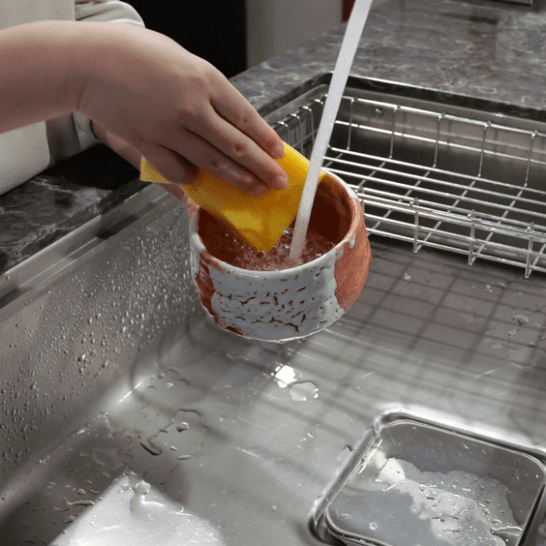
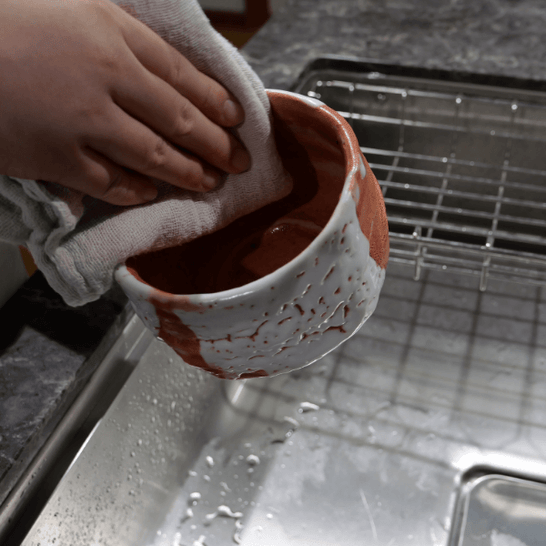
Wipe off the water with a soft cloth or kitchen paper.
Sun-dry for 2 hours, or if the weather is bad or drying indoors, dry for 12 hours.
The bottom (foot) of the matcha bowl is where you can directly feel the rare clay, but it can absorb water.
To prevent mold, please complete the drying process as outlined in STEP 3.