Article: From the First Bowl: How to Begin Collecting Japanese Tea Bowls
From the First Bowl: How to Begin Collecting Japanese Tea Bowls
Gallery Son Journal · on collecting tea bowls
Most collections do not begin with a plan. They begin with a single bowl that will not leave your mind. You saw it, held it, set it down — and went on thinking about it. That pull is the doorway. But there is a real difference between simply gathering things and building a collection, and a few principles separate the two.
Between collecting and accumulating
To pile up objects at random and to build a collection are not the same. A collection has a centre. One ware, one region, one maker — you narrow to a single path and move, within it, toward the best. A shelf that reaches for everything usually has quantity but no spine. The first thing to decide is not what to buy, but what to pursue.
What you love — and the best you can
Two principles are enough. First, buy what you genuinely love — not by reasoning, but the piece you find you cannot put down. A bowl like that never loses its value to you, whatever the market does. Second, when in doubt, choose quality over number. Two bowls or five, if each was chosen without doubt, that is a collection growing as it should. A shelf filled in haste with bowls that are merely fine is another thing. The centre of a collection is always that “this, exactly.”

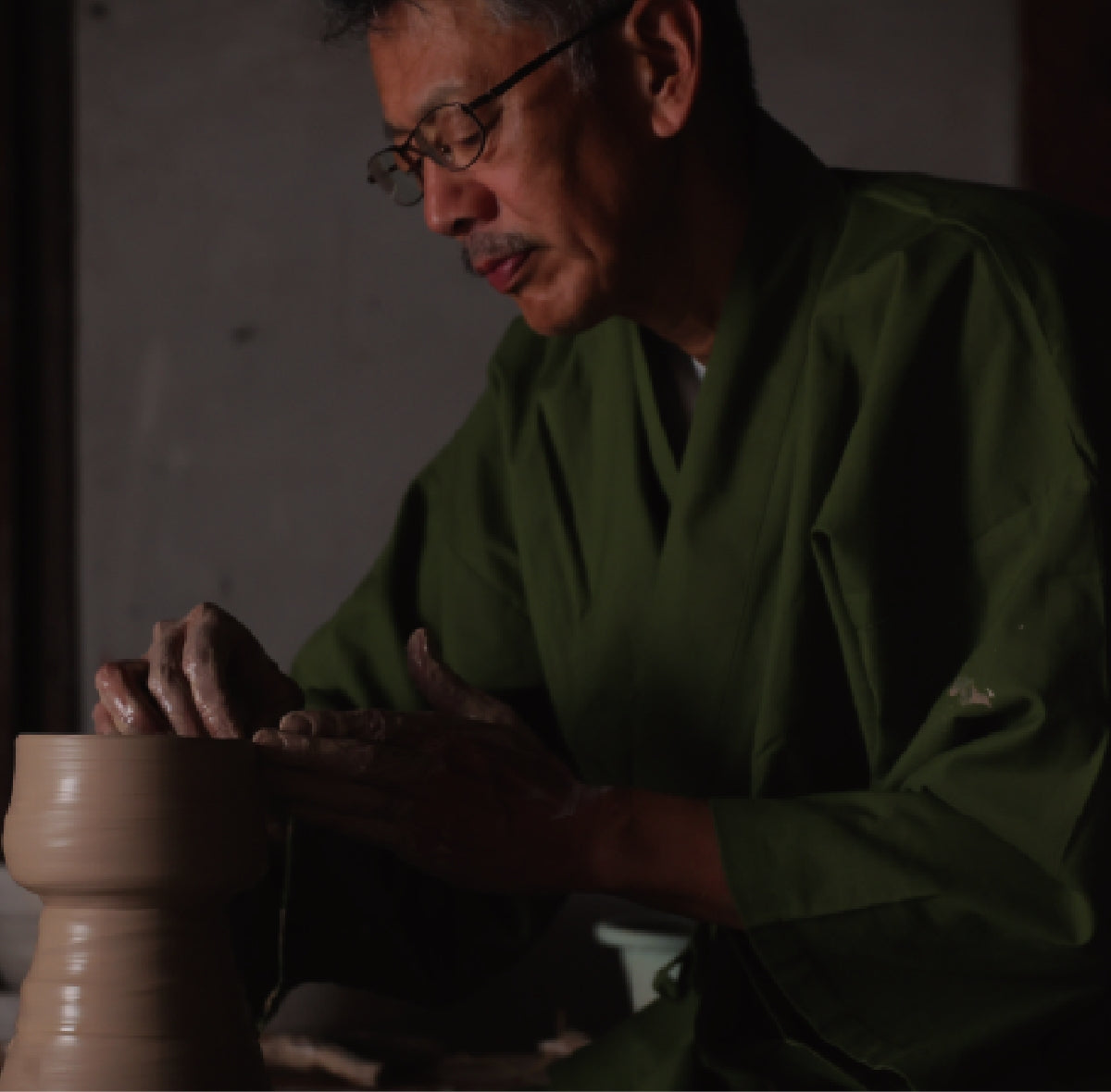
“Look at many, and choose one. Then do it again — I think that is the way,” says Kato Takaya. “If you meet a bowl that takes hold of you and will not let go, that will surely become your first. There is no need to gather numbers.”
The real edge is the eye
What separates a collection is not money but knowledge; the money follows the trained eye, not the other way around. So first, look. Go to museums, hold pieces where you can, spend time with good work. The more good work you see, the more your eye grows — and what you want changes with it. We have spoken before of the eye that reads the foot and the keshiki, and the eye that reads the box, the name, and the lineage. As those come to you, the very same bowl begins to look entirely different.
Taking a bowl in hand
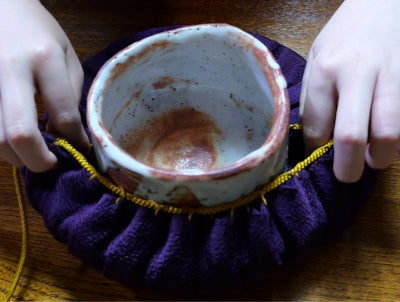
A bowl holds two pleasures: to be admired from across the room, and to be used in the hand. Both are the bowl’s pleasures. Only, let your first bowl be one that gives you many chances to touch it — whisked into each day’s tea and washed, or taken from its box, admired, and put away again; a bowl that ages and grows in the hand over the years. In time it becomes a companion, and one day an heirloom to pass on.

“If a bowl is taken into someone’s hands, that alone makes me glad,” Kato says. “Some people use it every day. Others take it from its box, look at it, and put it back — and make that their daily ritual. Either is a happy life for a bowl. So long as it is not forgotten at the back of a shelf, the bowl is alive. To collect, I think, is to give a bowl a long life.”
There is no need to hurry
So there is no need to hurry. There is no need to assemble numbers quickly. You may wait until you meet the one bowl you truly cannot part from. A collection grows slowly, out of that single piece. You choose the bowl. But in truth, we believe, the bowl is choosing you as well.

The Shino and Seto-guro of Kato Takaya can be seen at Gallery Son.