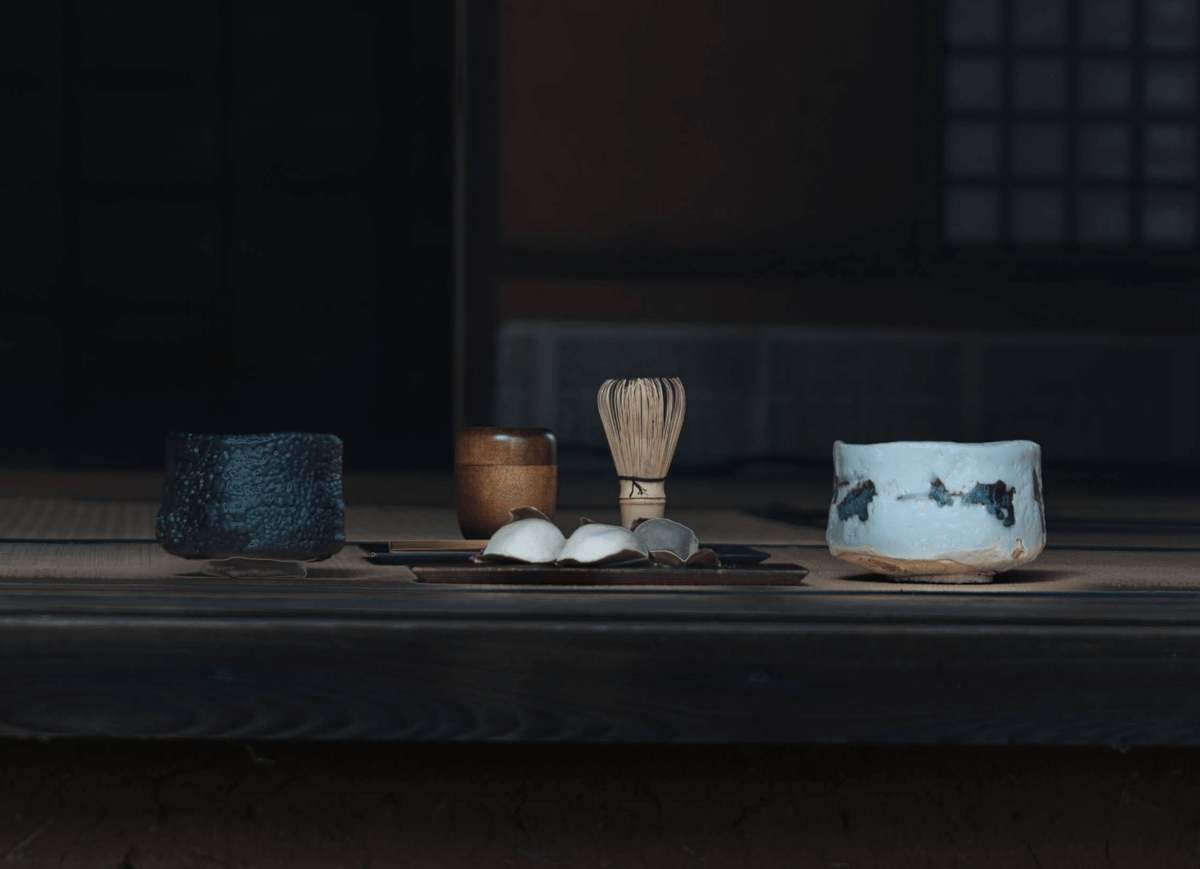
Article: In Summer, Make It Cool; In Winter, Make It Warm: The Tea Bowl That Changes with the Seasons

In Summer, Make It Cool; In Winter, Make It Warm: The Tea Bowl That Changes with the Seasons
Gallery Son Journal · on seasonal tea bowls, and the work of Kato Takaya
Asked once for the heart of tea, Sen no Rikyū is said to have answered with something almost disappointingly plain: in summer, make it cool; in winter, make it warm. It is one of the teachings known as Rikyū’s seven rules. Simple as it sounds, it holds the whole of tea within it. And one of the quiet places where this teaching is kept is the very bowl in your hands — for the bowl, too, changes shape with the season.
The summer bowl — wide and shallow
In summer, and above all at its height in July and August, the bowl favoured is the hira-jawan: shallow as a dish, and wide. It is also called the summer bowl. There is no rule that says it must be used. But the reason for it is plain, and it is coolness. The more broadly the surface of the tea is opened, the faster its heat escapes, and the more gently the bowl cools — a mercy at the height of the heat. The wide, shallow interior spreads the green of the whisked tea across its whole face and shows the foam without reserve: an open bowl that keeps nothing back — the posture of summer hospitality. Sometimes glass, or a bowl of a lighter colour, is chosen too, to carry coolness to the eye.

“A summer bowl is open,” says Kato Takaya. “You whisk as if releasing the tea into the sky. Because the bowl is shallow, it is a little harder to whisk well. But within that difficulty is the coolness of summer.”
The winter bowl — deep and cylindrical
In winter — above all in the coldest weeks, from the middle of January into February — the bowl is the tsutsu-jawan: tall, narrow, its walls rising straight up. The aim is warmth. The smaller and deeper the surface of the tea, the less easily its heat escapes, and the longer the bowl stays warm. The bowl itself is warmed with hot water before use. Narrow and deep, it is a small hearth in cold hands. It is a bowl for thin tea alone, never for thick tea. In some schools the host also wrings out the linen cloth during the tea-making and folds it afresh — shibori-chakin — to warm the bowl still further: a careful gesture, all for warmth.
A year that opens and closes
For most of the year, the round wan-nari bowl serves — a forgiving shape that suits any season. And as the seasons turn, the bowl changes shape as though breathing. In winter it is deep and drawn in, holding the heat close; toward summer it grows shallow and wide and open. The fire of the tea room moves the same way: in winter the sunken hearth opens in the floor to warm the guests, and in summer the brazier carries the fire away, to hold its heat at a distance. As autumn deepens in October, there is even a custom called nakaoki, in which the brazier is drawn a little nearer to the guests — the fire edging toward them. Bowl and fire alike move with the turning of the year.
Coolness, warmth — and care
But this is not merely a matter of heat. To match the bowl to the season is an act of care. The host chooses the bowl with the day’s warmth or cold in mind, and with the guest in mind, saying without words: I have thought of you, and of this season. A bowl used out of season feels faintly unsettled precisely because the bowl is a kind of letter. The whole heart of a day can rest in the choice of what is set before someone.

“To choose a bowl is to welcome one season into your hands,” Kato says. “A shallow summer bowl, a deep winter one — either way, the season comes a little closer. I make my bowls hoping a person will feel the mountains, the moon, the wind within them. The seasons are one of those things.”
One season at a time
Japan has four clearly divided seasons. The cherry blossom of spring, the cicadas of summer, the crimson leaves of autumn, the snow of winter — the calendar, poetry and cooking alike have all been built around this turning. The way of tea is one of them: the scroll, the flowers, the sweets, and the bowl itself all reflect the season of the day. That the bowl is bound to the season is part of a long habit — of a people who have lived, for centuries, alongside the seasons. You can pass a whole year with a single bowl. But the wish to drink from a summer bowl in summer, and a deep one in winter, comes from something simple: that we, too, live with the seasons. The bowl keeps quiet company with their turning.

“You can keep to one bowl all year, and that is fine,” Kato says in closing. “But when you make tea in a different bowl with each season, the turning of the year is felt more deeply in the hand. A bowl ties our days to the seasons.”
The tea bowls of Kato Takaya can be seen at Gallery Son.