Article: What Is Shino? Japan's First White Glaze and the Fire That Colors It
What Is Shino? Japan's First White Glaze and the Fire That Colors It
Gallery Son Journal · on Shino, and the work of Kato Takaya
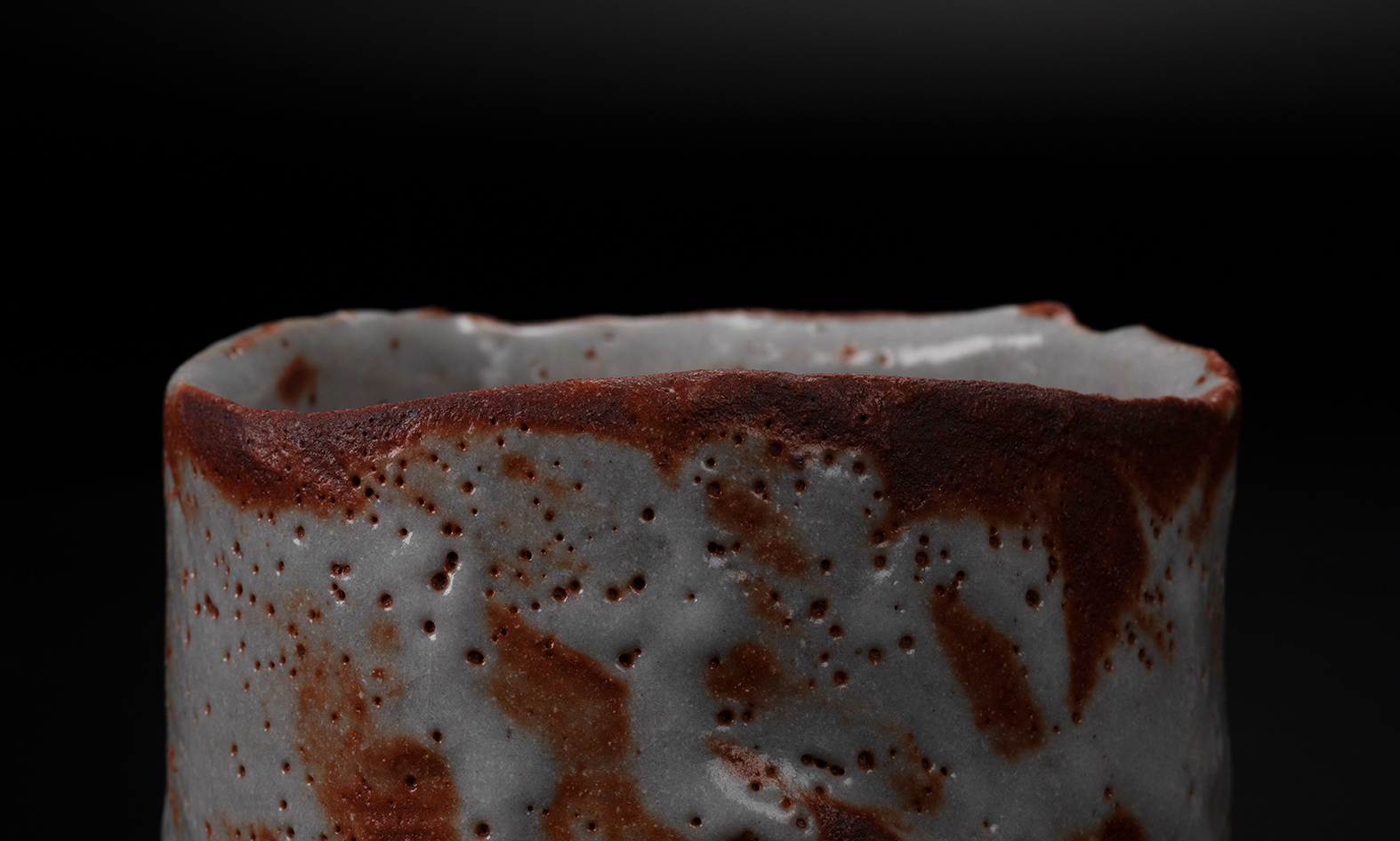
There is a white in Japanese ceramics that does not gleam. It is soft, deep, faintly uneven — closer to snow at dusk, or moonlight on paper, than to anything polished. Where the glaze runs thin, a warm orange blush rises through it, as though the fire had left its breath on the surface. This is Shino: the first white glaze Japan ever made, and one of the most quietly coveted wares in the history of tea.
Before Shino, white came from elsewhere
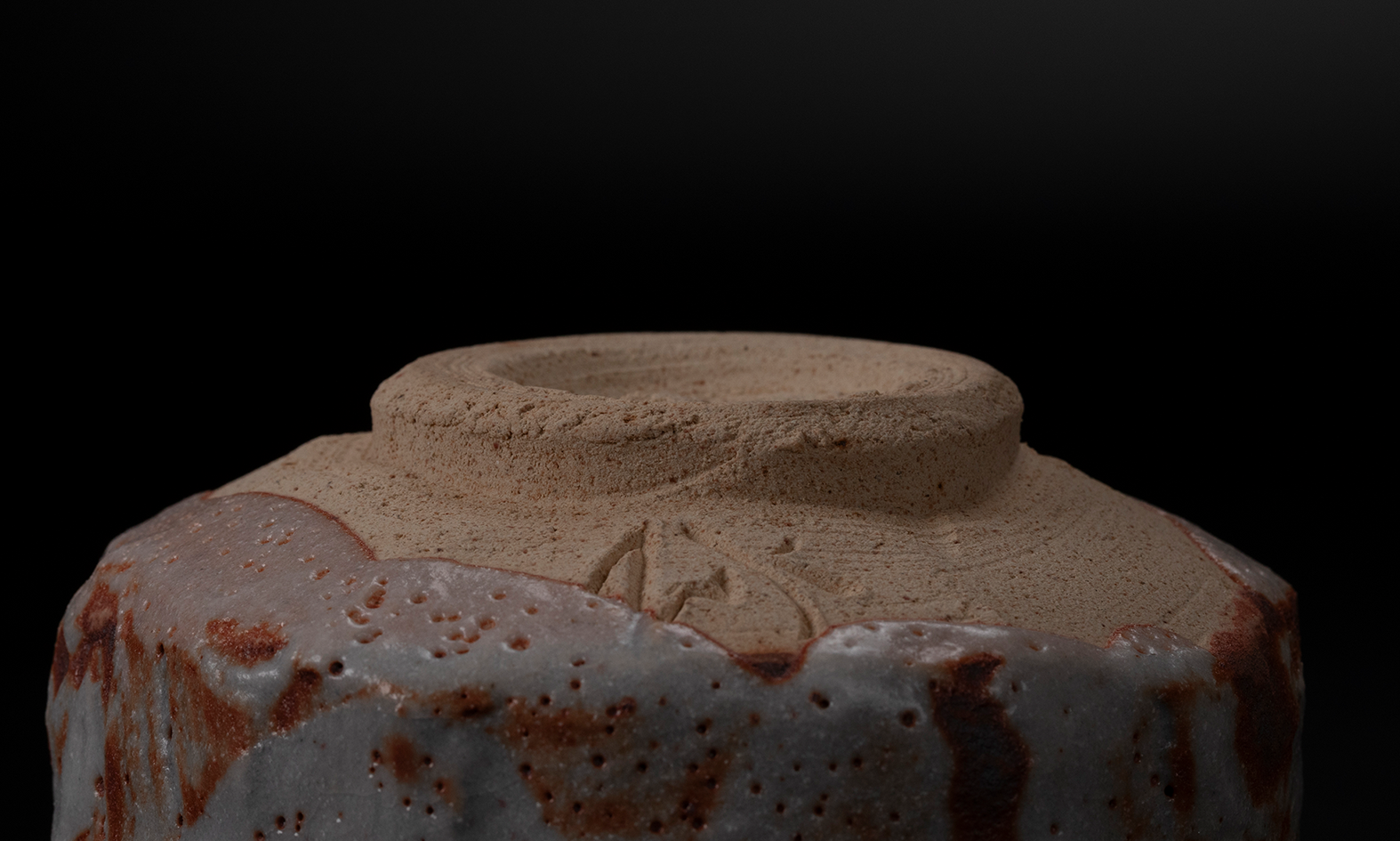
For centuries, the finest pale wares in Japan were imported — Chinese porcelain and celadon, smooth and perfect. Then, in the late 16th century, in the Mino hills of what is now Gifu, potters did something never done before in Japan: they made a white of their own. Ground from local feldspar and laid thickly over a body of pale mogusa clay, the Shino glaze was opaque and unhurried, with a warmth and a quiet unpredictability the glassy, flawless imports from China did not have. And that was exactly why the tea masters of the age, who had begun to prize the imperfect over the perfect, took it to heart.
The artist Kato Takaya, who has made Shino for more than four decades, describes its pull in a single image: “Chinese white is a mirror. Shino white is snow — it holds light softly, and it holds warmth. You do not look at a Shino bowl. You look into it.”
The fire colour
Shino’s most sought-after feature cannot be painted on. Where the white glaze is laid thinly — at a rim, along a ridge, over the foot — the iron in the clay and the breath of the flame conspire to raise a soft orange-red blush: the hi-iro, or “fire colour.” It is never the same twice, and it cannot be commanded. During firing the thick glaze also bubbles and draws, leaving a fine pinholed surface — like the skin of a citron — that catches the light. To a discerning eye these are not flaws. They are where the bowl is most alive.

“I cannot decide the fire colour,” Kato says. “I can only prepare the bowl, lay the glaze thinly where I hope, and give the rest to the kiln. When the blush comes — when the white opens and the warmth shows through — that is the fire answering. I have spent a life learning to ask the question well.”
The first paintings on Japanese clay
Shino holds another quiet distinction. On many pieces, simple motifs — reeds, a bridge, grasses, a half-moon — were brushed onto the bare clay in iron oxide and then covered with the white glaze, so that they surface dimly, as if seen through mist. It is regarded as the first painted decoration set beneath a glaze in the history of Japanese ceramics. Because the thick glaze softens fine detail, Shino’s pictures are spare and suggestive rather than precise — a few strokes that ask the viewer to complete them. From the same family come nezumi-shino, “mouse” grey Shino, its designs scratched through an iron slip, and beni-shino, a warm red Shino.
A ware that vanished, and returned
Shino’s moment was brief. As the old anagama kilns gave way to newer multi-chamber kilns in the early 1600s, Oribe ware rose and Shino slipped away — its formulas forgotten for some three centuries. Its finest survivors became treasures: the Shino tea bowl known as Unohanagaki is today a National Treasure of Japan, one of only a small handful of Japanese-made tea bowls so designated. Then, in the 1930s, the potter Arakawa Toyozō studied shards from the old Mino kilns and, firing in the old ways, brought the lost glaze back to life. He was later honoured as a Living National Treasure. The line he reopened has been carried, hand to hand, ever since. Kato Takaya learned Shino directly from Suzuki Osamu — himself a Living National Treasure of the ware — and works within that lineage today.
Shino now
To make Shino in the present is not to copy the Momoyama bowls, but to keep their spirit beside the fire.

“The old potters were not trying to be traditional,” Kato says. “They were finding something new — a white no one had seen. I try to meet them there, not to stand behind them. Each firing, I am still waiting to see what the fire will give. After forty years, that is still the most beautiful moment: the kiln opens, and the white is warm.”
The Shino of Kato Takaya can be seen at Gallery Son.