Turn the Bowl Over: Where the Master's Hand Lives
Gallery Son Journal · On reading a tea bowl, and the work of Kato Takaya
A tea person picks up a bowl that has caught their eye. The first thing they do is almost always the same — they turn it gently over. Not the front, not the painting, but that small foot, the part that disappears against the tatami once the bowl is set down. Antique dealers know this gesture well. Why should the answer lie in the place that vanishes from view? What does it mean to truly “see” a tea bowl?
Kodai — where the hand cannot hide
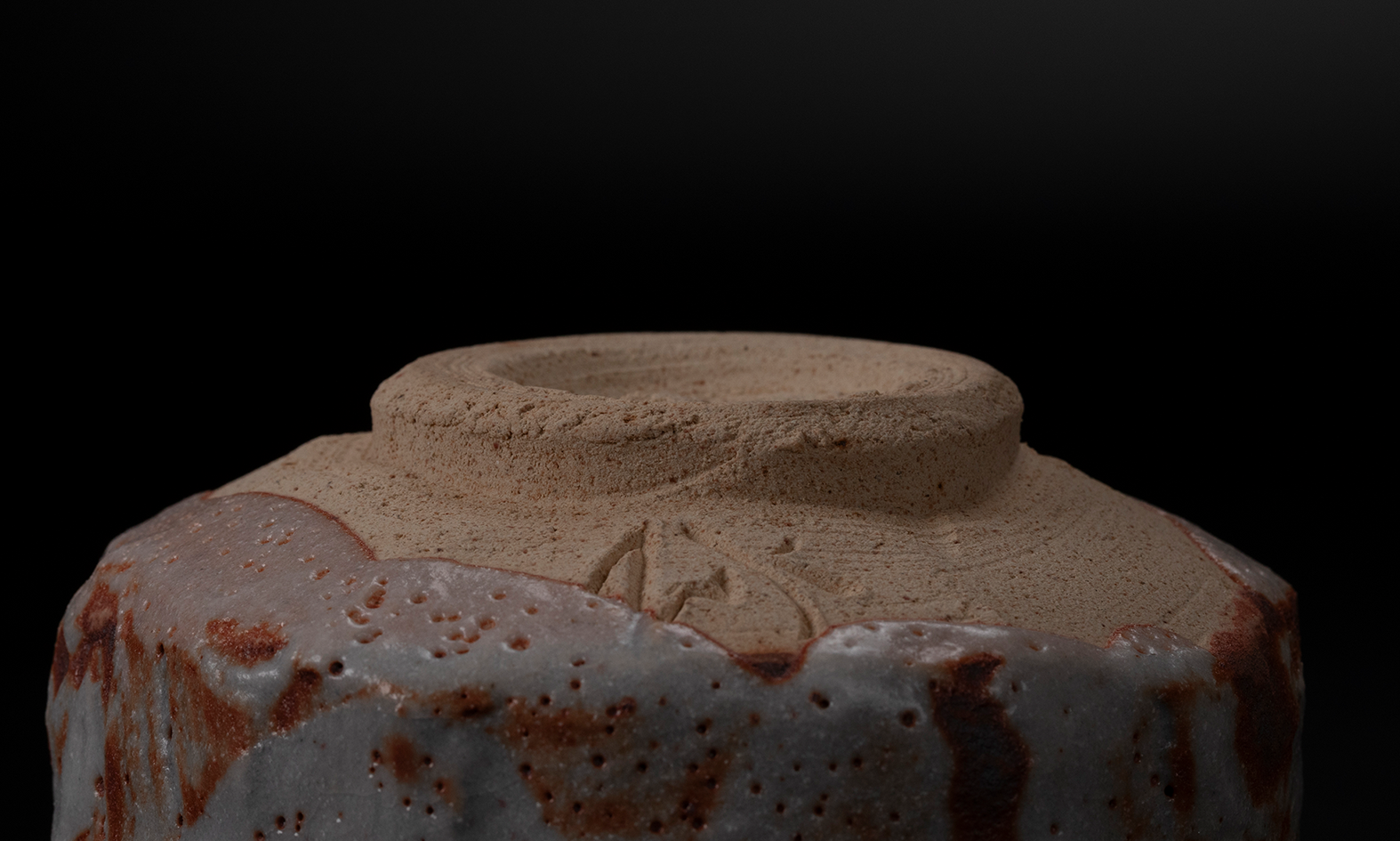
The round foot that supports the base of the bowl is called the kodai. It disappears from sight the moment the bowl is displayed, and yet it is what the discerning eye values most. The reason is simple: the maker's hand remains there, exactly as it was. The kodai is carved after the bowl is formed, and the marks of the wheel and the trimming are cut into it in a way that cannot be disguised.
In the world of tea it has long been held that the kodai must be cut without hesitation, in a few decisive strokes. It is never worked over and over. That committed, irreversible movement produces an unexpected quality that can never be reproduced. And when someone tries to “manufacture” that naturalness afterwards, those who can see will always know.
Kato Takaya says: “The kodai cannot lie. The more you try to tidy it, the more it dies. I simply let the tool follow where the clay wants to go. What remains is the hand of that day, and days of fire.”
Kuchizukuri — where the lips meet the bowl
The rim of the bowl, the kuchizukuri, is where the drinker's lips touch. There is the ubaguchi that curves inward, the hatazori that flares outward, the yamamichi that rises and falls like a mountain path — the shape of the rim determines the expression of the bowl, and finding the rim that suits you becomes one of the quiet pleasures of loving tea bowls. At the same time this is a matter of pure practicality: smooth enough to wipe with a chakin, gentle against the mouth. Beauty and use live together in a single rim.

Mikomi — where the tea comes to rest
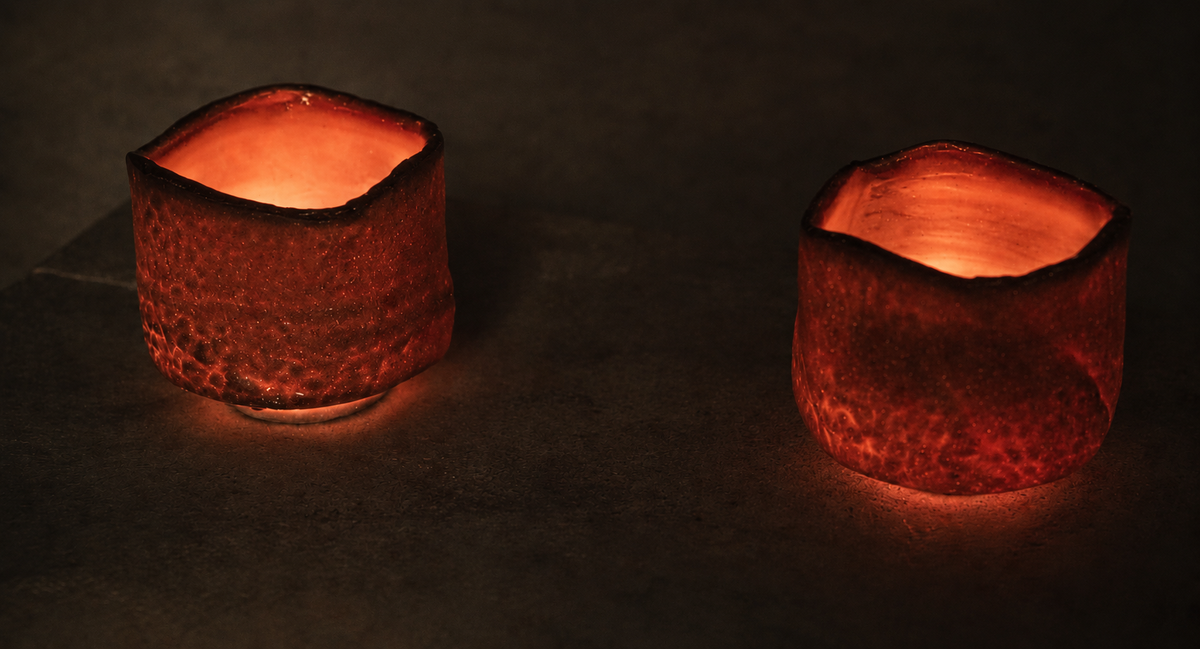
The hollow of the interior, seen from above, is called the mikomi, and its deepest centre is the chadamari. This is where the whisk moves, where the tea is prepared, and where the pale green finally settles. The glaze flows down into it and draws patterns no one intended. Sometimes the fine lines of kannyū crazing catch the light. Inside the bowl there is a small landscape of its own.
The weight in your hands
And there is something a photograph can never convey: weight, and balance. A good tea bowl settles into cupped hands. Not too heavy, not lopsided, resting calmly through the whisking. This cannot be known without holding it. That is why the practised eye does not necessarily trust the perfect symmetry on the other side of a screen. To be regular and to be alive are two different things.

Keshiki — the difference between a flaw and a living face
Here lies everything the eye must learn. The glaze breaks at the rim, pools a little, lets the clay show through — this shifting is called keshiki. To assume that an evenly finished glaze is “higher quality” is the most common misunderstanding of all. A bowl whose glaze moves is one you never tire of looking at.
What matters is whether that irregularity is alive with intention, or merely careless, or an artifice dressed up as “nature.” A kodai whose centre sits slightly off is not proof of a shortcut, so long as the bowl stands securely. It is the trace of a human hand. The sure eye reads exactly this.

“I do not aim for perfection,” Kato says. “Nor do I hide the flaws. What the clay revealed, what the fire set down — I leave it as it is. Kintsugi, mending a broken piece with gold, is beautiful for the same reason. Nothing concealed, and the life continues.”
What lives in the hidden place
When a bowl is displayed, the kodai lies in shadow. And yet those who can see look there for what is deepest. To know that a sure hand is present where no one looks — from this comes the sense of depth the Japanese call yūgen.
Kato Takaya closes with this: “The place nobody will ever look at is the place I make most carefully. Perhaps no one will praise it. But those who understand will understand. I believe a vessel is made of that kind of honesty.”
The tea bowls of Kato Takaya can be seen at Gallery Son.