Article: A Bowl with a Name: Reading the Mei, the Box, and the Life of a Tea Bowl
A Bowl with a Name: Reading the Mei, the Box, and the Life of a Tea Bowl
Gallery Son Journal · on the name, the box, the lineage, and the work of Kato Takaya
In the West, a bowl is a bowl. In Japan, a serious tea bowl carries three things a stranger would never guess it had: a name, a home, and a life it remembers. To understand these three is to understand how to recognise — and how to trust — a real one.
Mei — giving a bowl a name
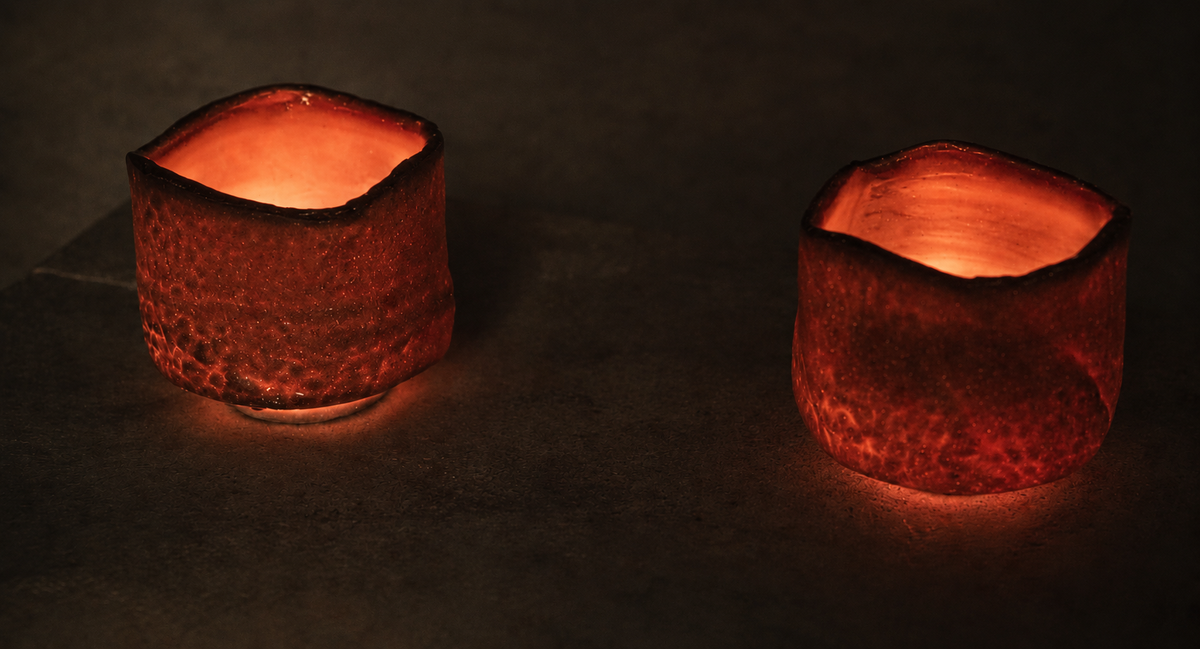
A fine tea bowl is often given a mei, a name of its own. “Unohanagaki.” “Chitose” — A Thousand Years. “Fujisan.” A bowl may be named for its form, for a landscape in its glaze, for a season, or for a line of poetry. Once named, it is no longer a utensil but a presence. The name may be given by the maker, by a tea master who later owned it, or by a connoisseur. To be named is to be recognised as the only one of its kind in the world.

“A mei is not decided right away,” says Kato Takaya. “I sit with a piece for a while after it is fired, and wait for the name to rise from the bowl itself. A name is not so much given as heard.”
Tomobako — the bowl’s home
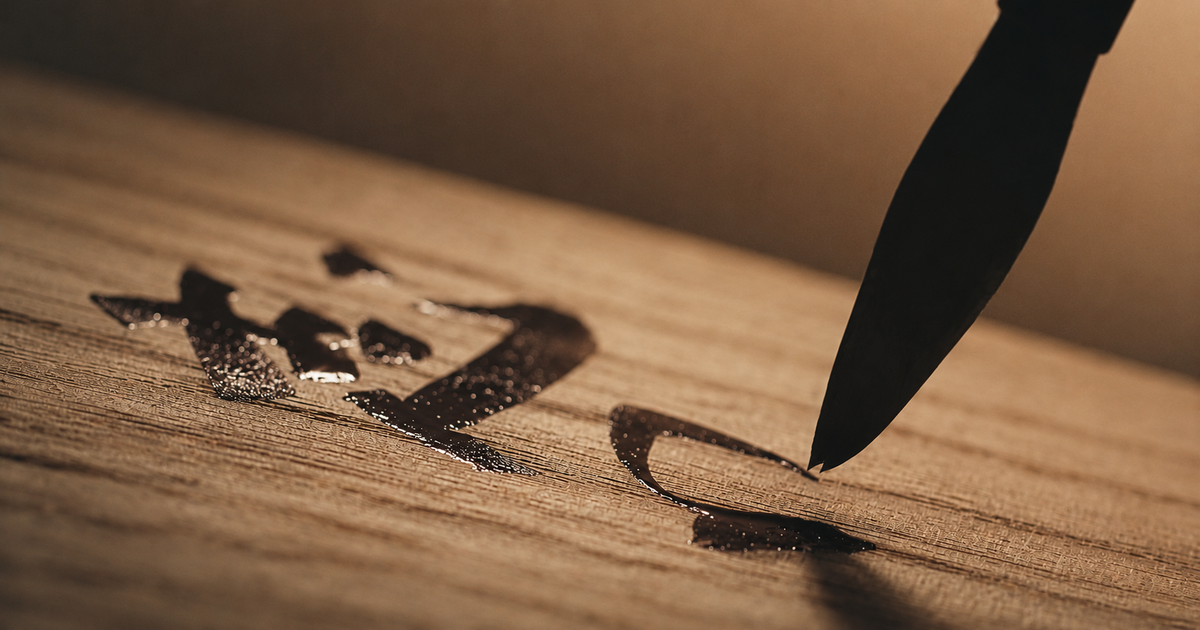
A Japanese tea bowl is kept in a box of paulownia wood. This is not packaging. It is the bowl’s home, and the passport that vouches for who it is. Paulownia (kiri) is chosen for good reason: it regulates moisture, repels insects, and ignites only at around 400°C; and even when it does catch, the surface chars and is slow to carry the heat inward — so it guards the bowl even from fire. On the lid is written the hakogaki, the box inscription: the maker’s name, the bowl’s mei, the type of ware, sometimes a line of verse, and a red seal. A box signed by the maker’s own hand is a tomobako — the “accompanying box,” born with the bowl and staying with it.

The box that tells the lineage
The box does not belong to the maker alone. A box inscribed by a tea master is a kakitsuke-bako; a box signed by a connoisseur who has appraised and vouched for the piece is a kiwame-bako, close in spirit to a certificate of authenticity. And each time a bowl changes hands, a new owner may add another box. So a single celebrated bowl may come nested in two or three boxes, sometimes more, each bearing the signature of a different hand from a different age — a family tree of the bowl’s own travels. The full record of a work’s making, ownership, exhibition and sale is its raireki, its lineage; and for a tea bowl, it is the box, above all, that carries it.

So how do you confirm a real one?
Here something should be said plainly. “If it has a tomobako, it is genuine” is too simple. A handsome box may hold an ordinary bowl, and a fine bowl may arrive in a plain one. The way to judge is not the box alone, nor the bowl alone, but whether the mark on the bowl’s foot and the signature on the box answer to one another. Only when the two agree does certainty begin to form. In recent years, counterfeit box inscriptions have spread widely, and there are even kiln effects “manufactured” by machine to look spontaneous. This is exactly why the eye that reads the bowl itself — the foot, the keshiki we spoke of before — has the final word.
There is no bowl without a name
On a bowl set out on a shelf there is, hidden from view, a name, a signature, and the years it has travelled. To know this is to see a tea bowl not as a mere object, but as a life with a history.

“When I write the name on the box, tie the cord, and send a bowl out,” Kato says in closing, “I feel as though I am writing a letter to someone I may never meet — hoping this bowl will live a long life in their days. The box is the paper that wraps that wish.”
The tea bowls of Kato Takaya can be seen at Gallery Son, each with its name and its signed box.